Dogs: Finding A Good Training Class
There are reviews of several good books on dog training
and behaviour in Books on Animals.
See also:
 Dogs:
Choosing a Dog Dogs:
Choosing a Dog
Dogs:
Bringing up your puppy
Dogs:
Using Flexileads Safely
Dogs:
Helping Dogs with Sound Phobias and Fear of Fireworks
Dogs:
Basic Training
Dogs:
Behavioural Problems
Dogs:
Dogs and Diet
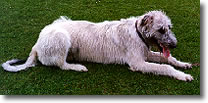
Training classes are useful for helping to socialise
dogs
Click on me to see me with my friends
What are training classes for?
Training classes can be a great help for owners who want to get the best from their dogs, especially novice owners, or people who find they have an especially challenging dog. Classes can help you learn how to teach commands to your dog, get him used to being with other dogs, and put you in touch with other dog owners. Trainers can provide ongoing advice, and give you feedback on your body language. They can advise how to use your body to communicate more effectively, and tell you about messages you may be unwittingly sending your dog. Using your body to give messages is a particularly important skill, since dogs look at you to work out what you want, as well as listen, and it's sometimes easier for other people to see what the dog probably sees than it is for us.
What training classes don't do is train your dog. You do that with the knowledge from what you learn in class, applying basic commands to teach your dog your rules in everyday situations. It's relatively easy to teach a command in class. Dogs are sensitive to hierarchies, and if your dog sees you defer to the trainer, the dog is likely to be in a deferential mood. You are also a point of safety when there are a lot of other dogs about, so your dog is likely to stay near you. The real work of training lies in applying what you have learnt in class to everyday life. A training class provides a much more controlled setting than walking alongside a busy road with motorbikes roaring past, or a walking through a park full of dogs off leash.
Some trainers encourage owners to study for dog obedience exams. Working for and passing these can be useful in giving you confidence and a solid base to build on. However, they don't mean that your dog is 'trained' in the wider sense of being able to cope with what life in the outside world can throw at you both. Training in the wider sense includes socialisation, getting your dog used to other dogs and people, and helping your dog learn social rules for different situations. It also includes getting used to potentially scary situations, like having children run screaming past them. Ask ten trainers what a trained dog should know, and you might get ten answers! At the very least, it means learning the rules that make it possible for your dog to share your lifestyle, and as our lifestyles vary, those rules vary from one person to another.
It's easy to fall into the trap of thinking that training is what happens in class, forgetting that training happens all the time we are with our dogs. It's very useful, for example, if a trainer demonstrates how to handle dogs in ways that tend to relax them, rather than winding them up. If you can do that, and teach your dog to be relaxed about being handled, it makes grooming and going to the vets easier. But if you forget the lesson when you get home, and wind the dog up into bitey mode because you are both bored, the effort in training class is a waste of time. If you are bored, it's more useful to invent games to play that reinforce commands, like getting the dog to sit and stay while you hide titbits, and then sniff for them on command.
Skills training can be more fun than obedience training, and the two can mesh together very nicely. Skills training is more about doing things, while obedience training involves a lot of being still and not doing things. However, most skills training involves using some obedience commands, for example a sit and stay before an object is thrown for your dog to retrieve. Even pups can enjoy modified skills training, though some work, like agility, is only suitable for older dogs. A good trainer can advise on the sorts of skills training that would suit you and your dog.
So how can you find a good training class? This depends a lot on your needs, what is available locally, your income, and the amount of free time you have. Different types of classes suit different owners. Types of classes range range from drop-in dog clubs, to one-to-one training sessions in your home.
Drop-in dog clubs
These clubs usually hold classes at fixed times, in a hall or out-of-doors, and anyone can turn up. They offer flexibility, which can be useful if your work means you aren't available to go to training every week. They tend to be cheap, because the trainers who run them don't usually get paid, but just charge a fee for hire of the hall and other costs. Many owners build up long-term relationships with dog clubs, and attend for years, doubling as volunteers, keeping the register or making the coffee. You may drop in and find the club doesn't suit you, in which case you can leave after a couple of classes, and don't have to worry about losing a fee paid in advance.
These clubs have many advantages, but they don't suit everyone. The trainers don't know how many people will turn up from one week to the next, which makes planning classes more difficult. Some classes may be noisy and overcrowded, especially at the basic level. This may be stressful for owners and their dogs. Owners may have trouble hearing instructions in large classes, especially if there are spectators chatting in the background. Dogs, which hear and smell much better than humans do, may suffer from sensory overload, from the noise and smells of many dogs and humans together. They may find it difficult to cope with being with a lot of other dogs, especially if there isn't much room per dog - more of a problem with indoor classes. When classes are crowded, trainers may be unable to see what is happening with every dog, especially if there is no assistant.
Owners may also be less inclined to make the effort to attend every week, because they have not paid in advance. If you go to a drop in class, it's worth being a regular, rather than a sporadic attender at a drop-in class, because it's easier to keep up the momentum of training, and you and your dog get to know other attenders, which also makes training more relaxing.
Drop-in classes held in outdoor locations are more suitable for dogs that get stressed out easily. There is generally more room, and less noise at outdoor classes, while in an indoor hall, nervous dogs may be forced to be close to other dogs, and sounds can seem louder and more distorted as they bounce off the walls. Outdoor classes are especially useful for dogs that are not used to being with other dogs. Some trainers allow unsocialised adult dogs to start outdoor classes as spectators. The dogs watch outdoor training from a safe distance, starting to join in when they look relaxed, initially just taking part in exercises that don't involve going very near other dogs. The main problem with outdoor classes is that it may rain. The locations may also not be secure, which means that dogs can only be off leash if they have a reliable recall.
Fixed schedule classes
Fixed schedule classes, lasting a set number of weeks, can offer several advantages compared with drop-in classes. Classes are often smaller and quieter, with more attention paid to each dog. Owners usually pay in advance, and make a commitment to attend, so the trainer can plan classes more easily. Fixed schedule classes also tend to be better structured, because a group starts at the same time working on the basics, and makes a little more progress each week, while a drop-in class may have owners who have been going for months alongside people who have just started. Owners and dogs can get to know each other better if the classmates are the same each week.
Fixed-schedule classes are probably a better bet for nervous dogs, if you can afford them, and the alternative is a crowded drop-in class. However, you may find that drop-in classes offer quieter classes at the higher levels. Higher level classes tend to attract fewer owners, who also usually attend more regularly, since if owners get as far as these levels, they have a high level of commitment. You may also want ongoing support over several years, and fixed-schedule classes may be too expensive for this. There are also dogs which are not ready to train with other dogs, and owners of these dogs may be better off with one-to-one training.
One-to-one training
Some trainers will see you in your own home, where they are better able to assess a dog which behaves badly in home situations. One-to-one training may also be helpful for older dogs which react badly to other dogs. They can be introduced to other dogs more gradually than in a class setting, using hand-picked, calm, older dogs to start with. At some point, however, it is often helpful to get your dog used to being with others in a group class, especially if you can find a flexible class where is plenty of room at the venue so your dog can learn to take part at his own pace.
Talk to the trainer beforehand
Whatever option you choose, talk to the trainer beforehand about whether you and your dog will fit into the class, and what the trainer can offer you. You want someone who can take you beyond getting your dog to obey a few basic commands for titbits. That's something most owners can learn very easily from a book. Good trainers shouldn't be offended if you ask about their qualifications, experience, interests and training methods. There are talented trainers with no formal qualifications. Much of what we learn about dogs comes from experience, so qualifications don't guarantee excellence. However, a qualified trainer has made an effort to learn the accepted wisdom about training at the time they took their exam. A trainer who regularly takes courses on dog-related topics has a clear commitment to keeping themselves informed.
A good way of finding out if the classes will suit you is to go and watch a class as a spectator, which many trainers will allow. How cheerful and confident do the owners look? How well are the dogs behaving? Do they have enough space to be relaxed and safe? Does the trainer make you feel confident? How relevant is what is being taught to your needs?
There's also the question of methods, which should suit the dog. Some trainers can be a little heavy handed for dogs that work better with a light touch. Others may be too diffident to teach firm commands for dogs that need them, and some trainers may also rely too much on titbits. Titbits are used by many trainers in basic obedience classes. They can be useful when the dog is first learning a command, but they aren't the only way to motivate dogs, and can sometimes be unhelpful. Furthermore, if you do use them for teaching new commands, the long-term goal has to be for your dog to do what you ask even if you don't have a titbit. You can ask the trainer what methods are used to motivate dogs in class, but the best way to find out is to watch.
If something is offered as a reward, it has to be rewarding for the dog! Some dogs may not particularly enjoy being touched. A tummy tickle or a butt scratch are acceptable when they are in the mood, but if you try petting as a reward, the dog may sometimes just back off. Some dogs appreciate petting, but while other dogs really do not, so you need to read your dog to find out what is rewarding.
Some trainers use touch more than others, and it can work well, or can complicate your life, even with a dog that really loves to be petted and cuddled. Even gentle positioning can start to put off a dog if you don't really know what you are doing and try doing too much. It may be better to work at positioning with a clicker, to get your dog to stand nicely and so minimising the amount of hands on to an amount that he still enjoys.
There is a big difference between using touch in a way that helps to build up trust, and physical coercion. 'Hands-on' methods can be a very effective way of building up trust, but it takes more skill to use and teach them well, and that skill comes from experience.
´Working dog' training, Gundogs as an example
Methods are especially important if you want to learn working dog skills. Working dogs which are not also pets are sometimes seen as tools, and some working dog trainers use methods that rely too much on coercion, so are not suitable for pets. Too much coercion can undermine trust between dogs and owners. Pet owners are more likely to be comfortable with trainers who both work their dogs and enjoy their company as house pets.
People who live with their dogs tend to appreciate the whole dog. Seeing a dog as a 'tool', which you put away when you have finished working with it is only seeing part of the dog. It is not really having a relationship with the dog, or allowing the dog to fulfil its potential in communicating with humans in many ways.
The 'work' a working dog does is, for the most part in the UK, for sport - especially gundog work. Some people excuse harsher training because they compete and need more control - but surely if you are competing, you are doing so purely for your own enjoyment - people don't usually need to shoot for food in the UK, and the guns on shoots pay a lot of money to participate in shoots - because they enjoy it. So if you work your dog, you are doing so 'for fun' and if you have to hurt your dog to train it for your sport, is that not hurting a dog 'for fun'?
If you have to hurt your dog, then you may have the wrong dog for what you want of it. If you buy a dog from a breeder specialising in pets and show dogs, they may have a lot of hunting instinct, but lack of selection for working ability and ethic may produce a dog that will always be unreliable to work with, unless you were maybe prepared to take the risk of being very, brutal. However, a dog selectively bred from parents with proven working ability and ethic, from grandparents with proven work ability and ethic, is usually a completely different creature entirely.
If you want to work the dog you have, first assess its basic work ability and ethic - go along to a scurry, and consider how your dog is around 'small and furries' - if your dog is quick to want to kill them, he will not be a good working dog, however if your dog is interested but doesn't try to dive in teeth first and is good at retrieving you might test this further by wrapping a rabbit skin around a ball or dummy, then moving on to cold game . It just might be that the dog isn't suitable for 'gundog' work, but it might still be fantastic as a tracking dog or a 'dancing' dog (heelwork to music)...
If you have yet to get a dog and intend to work it, that's a different ball game - work ability is still not guaranteed but it is worth researching the pedigrees and ensuring that your dog comes from a few generations of working dogs. Buying a pup from working mother means you have more chance of getting a better slice of the nurture / nature ratio with regard to the dog's work ethic.
Training challenging dogs
An experienced trainer is essential if you have a dog that is especially challenging. Basic training for a lab or retriever puppy is relatively easy compared with training a pushy adolescent dog which is going through a rebellious phase. Most trainers can cope with the former, but if you have one of the latter, you need someone who has a lot of experience. Whatever problems you may be faced with, you need a trainer with a track record of success in solving those types of problems. The venue should also preferably be quiet rather than crowded and noisy, so you can focus more easily on your dog.
You need to be honest about any 'challenges' your dog may present, and ask whether the trainer is willing and able to deal with them. For example, if you have a dog-aggressive dog which you have trouble handling, it's unfair on the trainer to turn up at a drop-in class without warning - it's better for you, the dog, and the trainer to ask the trainer first.
It also helps if the trainer has worked a lot with dogs of the same breed, or breed type as your dog's. Some trainers have years of experience with labs, retrievers and collies, for example, including competing at a high level in obedience, but they may have have little experience of other breeds. There are differences in body language between breeds, and it's easier to read a dog if you are familiar with the way individuals from the breed tend to communicate. It helps to pick a trainer who has a lot of experience with your breed even if you have no particular training problems. Trainers who know the breed well will also know of temperament variations within the breed, and can more easily recognise traits in younger dogs that could become problems without careful training. For example, while socialisation is important for all dogs, some dogs are especially wary of strangers, and benefit from extra effort with socialisation. Likewise, other dogs may be touchy when handled, and may need a lot of 'hands-on' work, so they learn to be comfortable with being handled.
Some dogs present their owners with such serious problems that the owners seek advice from a qualified behaviourist. If you want to see a behaviourist, you have to see a vet first, and have the vet refer you. There are experienced trainers who can help with understanding why behavioural problems are happening and what to do about them. Many trainers have studied dog behaviour, and are aware that behavioural problems may have a medical, or other, non-training cause. So a trainer may be as useful as a behaviourist, especially a trainer who knows your dog's breed type well, and who has a lot of experience in tackling and solving your sort of problem. If you choose an experienced trainer instead of a behaviourist, you need to check with your vet first that your dog's behavioural problems don't have a medical cause. This is especially true if your dog was previously well behaved, and has suddenly started giving you grief. Many medical conditions affect behaviour, including toothache and brain tumours.
The Association of Pet Dog Trainers' website www.apdt.co.uk offers a directory of registered trainers in Britain. You can also get help for dogs with serious behavioural problems by being referred through your vet, and from the Association of Pet Behaviour Counsellors website www.apbc.org.uk .
DIY training
You may not be able to find a suitable trainer locally, in which case, you can start your own programme at home. Read as widely as possible, work out your goals, and build up a repertoire of exercises to achieve them. You will also find it helpful to meet up with other dog owners for walks and socialising your dogs. It can be more fun walking around in the rain with a friend, rather than alone, and the dogs usually enjoy it more too. People who meet regularly on walks tend to get on if their dogs get on, whatever their interests away from dogs. A network of dogwalking friends means you can help each other with dog walks if one owner is in bed with 'flu, or if one of you wants to go away for a long day.
You can even set up your own classes with friends if you can find a suitable, quiet location, like a secure large garden, or a field. It can be fun to practise basic obedience with a group of friends and their dogs, and this alone will help your dog to learn to behave when other dogs are about. You can try a rotating leadership, with one owner taking the role of trainer for each session. You don't need many owners for this to work - just two friends working together can achieve a lot. Friends can give each other tactful feedback on body language. It's worth each of you keeping a training diary so you have a record of what you have done, what worked well, what worked less well, and ideas for future classes.
A great benefit with DIY classes is that you can work out your goals, and gear the classes to your needs. Classes are a bit like rehearsals that can prepare owners and dogs for coping with the real thing. For example, if you want your dogs to behave well when bicycles whizz past, someone can bring a bike to the class. Then you can practise getting your dogs to focus on you, not the bike, in a controlled setting, with the bike at a distance, then nearer, being walked, ridden slowly, then ridden fast, until the dogs take no notice of the bike. Other fun exercises include one of you dressing up in strange clothes, like a big hat, or wearing a false beard, or hobbling with a walking stick, and getting young dogs used to passers-by with different appearances. There's also teaching dogs to stay still on command (sitting or lying down) while owners talk to someone for two, then five minutes, and teaching dogs on a leash that hubcaps are not to be peed on. If each of you works out what you really want your dog to learn, you can combine lists, prioritise, and structure lessons accordingly.
Obviously you will need common sense about safety. DIY classes work better if at least one of the owners is experienced with dogs, and if you trust each other. The main drawback to this method is that it requires some commitment and organisation. One way to keep the momentum going is to set out specific goals for a short period, like six weeks, and then decide if you want to carry on.
Maybe you will get the bug and want to work with dogs. A start is to find people with dogs you can manage who need a a dog-walker or a dog-sitter. You may even want to become a trainer. One effective way of doing this is to find the best trainer you can, and ask to become their assistant, because you can learn a lot of skills from a very experienced trainer.
Training should be enjoyable, though prepare for embarrassment!
Above all, find a trainer, or a way of training your dog, that allows you to enjoy the experience. The first classes may be embarrassing. It's very common for dogs to misbehave in their first session, barking, peeing in inappropriate places, and looking at you blankly when you give them a command that they had obeyed at home. They may be distracted, or your body language may be different because you are also tense and distracted. After a while, you and your dog should settle down. Young dogs are more likely to behave well in training if they have had a chance to run around and let off steam beforehand. At the very least your dog needs a walk round the block first, and a chance to pee, rather than going straight from home in a car to the class. Arriving a little early can also help, if it means you go into a quieter room rather than one full of dogs and people.
You have to accept the trainer's authority if you join a class, but you can make suggestions or requests, based on your knowledge of your dog. For example, if you feel he is nervous, you can suggest standing back and watching for a while. You may be in a better position to read your dog than a trainer who is trying to keep an eye on several dogs at once. Have the confidence to question the trainer if you are asked to do something you aren't happy about. You need to feel confident to be able to send confident messages to your dog.
Training classes at their best can be demanding. You'll need a sense of humour for when your dog does something embarrassing, but that embarrassment is offset by the great feeling when your dog does something well. And try keeping a training diary. Then you can look back and see how much you have achieved. It's the long-term progress that counts.
Acknowledgement
Thank you to Diana Attwood for comments on and contributions to this article.
See also:
Dogs:
Choosing a Dog
Dogs:
Bringing up your puppy
Dogs:
Using Flexileads Safely
Dogs:
Helping Dogs with Sound Phobias and Fear of Fireworks
Dogs:
Basic Training
Dogs:
Behavioural Problems
Dogs:
Dogs and Diet
There are reviews of books on dog training and behaviour in Books on Animals.
 Top
of page Top
of page
|


