Books on Animals
Hedgehogs and Dog and Wildlife-Friendly Gardens
If you want to buy a book, clicking on the book
cover will take you directly to that book on the Amazon.co.uk web site.
See also:
 Birdwatching in your garden, and making your garden bird-friendly Birdwatching in your garden, and making your garden bird-friendly
Miscellaneous:
Animal care and vet books
Caring for African Pygmy Hedgehogs
Caring for European Hedgehogs
Books on native wild ampibians
Click on the picture for wild flower and
other botanical stamps |
|
 |
|
Click on the cover above
to go to this book
at Amazon.co.uk
|

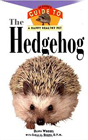
The Hedgehog : An Owner's Guide to a Happy, Healthy Pet
Dawn Wrobel, Susan A. Brown
John Wiley & Sons (1997)
ISBN-10: 0876055013
ISBN-13: 978-0876055014
This little book has now become a classic. It is an introductory guide to keeping African pygmy hedgehogs written by Dawn Wrobel, a specialist in hedgehogs with a lot of practical experience. She has both bred African pygmy hedgehogs , and is involved in hedgehog rescue. Susan Brown, who is a vet specialising in exotic animals, contributed the section on health care for hedgehogs. The result is a very useful guide for owners of African pygmy hedgehogs, based on first-hand experience as well as research. The book thoroughly covers the basics that would-be and new owners need to know, it is well organised and well illustrated. It is accessible enough for older children. If pushed, I would prefer Sharon Vanderlip's book on African Pygmy hedgehogs as a first choice, simply because it is more up to date, but Dawn Wrobel's book comes a very close second, is good value for money, and is definitely worth reading, especially if you are a novice owner.
 Top
of page Top
of page
|
Click on the cover above
to go to this book
at Amazon.co.uk
|
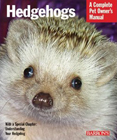
Hedgehogs: A Complete Pet Owner's Manual
Sharon Vanderlip
Barron's Educational Series, 3rd edition (May 2010)
ISBN-10: 0764144391
ISBN-13: 978-0764144394
This book may surprise British readers, because it focuses on a rather exotic type of hog, the African Pygmy Hedgehog, which is popular in the US as a pet, but is less well-known in Britain. Wild European hedgehogs are really best left in the wild, and if you are a hedgehog lover, you can encourage them by making your garden hedgehog-friendly - see below for some useful books on how to do this.
African Pygmy Hedgehogs are smaller than European hedgehogs, and are geared to living in hot climates, so they need to live indoors. Sharon Vanderlip's book is an interesting introduction to these exotic animals, whether you are interested in keeping one as a pet, or whether you just like hedgehogs, even if you don't actually want an African Pygmy Hedgehog as a pet. The book gives basic information on African Pygmy Hedgehogs both in captivity and in the wild, and has some lovely photos. It is easy to follow, so is accessible enough for older children, as well as adults. This guide covers a bit more ground than Dawn Wrobel's introduction to African Pygmy Hedgehogs, though neither is more than a basic guide, and serious hobbyists are likely to want more information.
Top
of page
|
Click on the cover above
to go to this book
at Amazon.co.uk
|
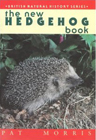
New Hedgehogs Book
Pat Morris and Guy Troughton
Whittet Books Ltd (Dec 2010)
ISBN-10: 1873580711
ISBN-13: 978-1873580714
The 'New Hedgehogs Book' is an updated classic, and is probably the best guide to wild European hedgehogs available for non-scientists. It is very clearly written, and gives a lot of information about hedgehogs as wildlife, together with tips on how to encourage them and keep them safe in your garden. The book is clear enough for older children to understand, if they are really interested in garden wildlife. The 'New Hedgehogs Book' in fact makes a better present for a child than Sally Morgan's much shorter 'Hedgehog', which is specifically designed for children. It's both more informative, and more fun to read, giving you useful information on helping your local hogs, such as what food to put out for them, and an account of hedgehogs' everyday lives.
Top
of page
|
Click on the cover above
to go to this book
at Amazon.co.uk
|
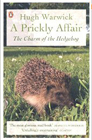
A Prickly Affair: The Charm of the Hedgehog
Hugh Warwick
Penguin (1 April 2010)
ISBN-10: 0141034297
ISBN-13: 978-0141034294
Hugh Warwick is obsessed with hedgehogs, and why not? They are truly magical creatures, and he conveys their magic to readers. 'A Prickly Affair' is a very touching book, funny in parts, serious in others, and always entertaining. It is clear that Hugh Warwick really likes hedgehogs, knows a lot about them, and wants everyone else to share his understanding. This is one of those rare books which both entertains you, and teaches you a lot. It is perhaps not suitable for children, especially any who are likely to be upset by the idea of eating hedgehogs. However, any thinking adult who is interested in the wild creatures which visit their garden, is likely to enjoy 'A Prickly Affair'. Maybe not all of us have the stamina to sit in fields in the dark, braving the cold for a glimpse of prickly creatures. We'd rather read about them while tucked up in a warm bed. Never mind because Hugh Warwick undergoes this uncomfortable task for us, as well as travelling to talk to other hedgehog enthusiasts in America, opening doors to worlds of hedgehog lore which we could never imagine existed. Highly recommended for anyone fascinated by wildlife and human quirkiness.
Top
of page
|
Click on the cover above
to go to this book
at Amazon.co.uk
|
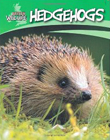
Hedgehogs
Sally Morgan
Franklin Watts (24 July 2008)
ISBN-10: 0749679123
ISBN-13: 978-0749679125
Sally Morgan has written a brief guide to hedgehogs aimed at older children. On the plus side, this is an accessible and scientifically accurate guide, so will enhance children's understanding of wild European hedgehogs far more than the more sentimental accounts aimed at children. It is, however, quite expensive for such a short book.
Top
of page
|
Click on the cover above
to go to this book
at Amazon.co.uk
|
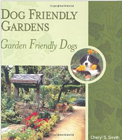
Dog Friendly Gardens, Garden Friendly Dogs
Cheryl S.Smith
First Stone (1 Oct 2008)
ISBN-10: 1929242077
ISBN-13: 978-1929242078
Cheryl Smith has written a useful book for dog owners wanting to fit their gardens to their dogs, and teach their dogs how to behave in the garden. The emphasis on training is refreshing. It is not only possible to train dogs to respect parts of your garden, it is also possible to train them to respect some wildlife, in particular, hedgehogs and amphibians. Dogs are far more compatible with wildlife than are cats, because dogs can be trained more easily. They also can't climb trees, so bird life is safer!
This book has tips for people who want low-maintenance gardens, and ideas for keener gardeners, such as what vegetable to grow for dogs. It goes beyond the usual advice to plant tough, non-poisonous plants. It is also well illustrated, and would make a nice present for someone with a garden and a dog.
Top
of page
|
Click on the cover above
to go to this book
at Amazon.co.uk
|
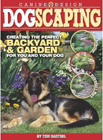
Dogscaping
Tom Barthel
Publisher: BowTie Press; 1st edition (2010)
ISBN-10: 1933958332
ISBN-13: 978-1933958330
Tom Barthel's 'Dogscaping' discusses garden landscaping with dogs in mind, so that both owners and dogs can enjoy the results. This isn't a fully comprehensive guide, but has a lot of useful tips, for example on safety features for dogs. These include avoiding noxious chemicals in the garden, as well as what structures to build that are safe for dogs. Because pesticides and herbicides can be harmful to wildlife, the part of the book on organic gardening is also useful for people who want a garden that is wildlife-friendly. The two can be easily combined. Though it is not easy to train dogs to respect foxes and rabbits, most gardeners do not welcome rabbits, which can do a lot of damage in gardens, while foxes tend to raid the rubbish. It is much easier to train dogs to respect frogs and hedgehogs, which help gardeners by eating pests. Birds are relatively safe from dogs because they can take refuge in the trees. So it makes sense to set up a garden that is both dog and wildlife-friendly. Anyone designing a dog garden will need a little more information, especially on choosing tough, nontoxic plants which grow in your local soil and climate. However, this book is a very useful starting point.
Top
of page
|
Click on the cover above
to go to this book
at Amazon.co.uk
|
How to make a wildlife garden
Chris Baines
Frances Lincoln; 2nd Revised edition (2000)
ISBN-10: 0711217114
ISBN-13: 978-0711217119
Chris Baines' book is a classic which first came out in 1985. This edition has been updated and revised. It is especially useful in explaining why it is worth creating a wildlife garden, as a way to preserve or recreate lost habitats. Baines' enthusiasm comes across clearly in this book, and there are a lot of useful tips, both on feeding wildlife, and observing wild animals and birds in your garden. this is a must read for anyone interested in wildlife conservation, and how they can contribute through creating a haven in the green space at the back of the house. The book is clearly written, so older children as well as adults would enjoy reading it.
Top
of page
|
Click on the cover above
to go to this book
at Amazon.co.uk
|
How to Create a Wildlife Garden: Complete Instructions for Designing and Planting Wildlife Habitats, with Over 40 Practical Projects, a Directory of 70 Wildlife Species and 800 Photographs
Christine Lavelle and Michael Lavelle
Lorenz Books; illustrated edition (2007)
ISBN-10: 0754817601
ISBN-13: 978-0754817604
This is a comprehensive book on wildlife gardening likely to delight gardeners, because there is so much information on individual plants, and on setting up and maintaining different types of garden features, such as borders and lawns, as habitats. There is help with plant propagation, as well as an account of which plants are likely to attract different types of wildlife. Readers can start from scratch, and plan their own gardens, or improve what they already have. The instructions are clear enough for novices, though you do need some enthusiasm for gardening as well as for wildlife. This is perhaps not the best book for someone who insists on very low-maintenance gardening, or who just wants to let their garden run wild. However, it does convey the pleasure of gardening, so may convert some unbelievers into enthusiastic gardeners.
The book deals with a wide range of wildlife species, including insects. There are tips on attracting wildlife species which can help gardeners, as well as tips on dealing with creatures that you would prefer not to share your garden with. How to Create a Wildlife Garden is very easy to understand, and is well illustrated, which helps both with following instructions, and identifying plants. Highly recommended.
Top
of page
|
Click on the cover above
to go to this book
at Amazon.co.uk
|
RSPB Gardening for Wildlife: A Complete Guide to Nature-friendly Gardening
Adrian Thomas
A & C Black Publishers Ltd (28 May 2010)
ISBN-10: 1408122308
ISBN-13: 978-1408122303
Though Adrian Thomas' book is called the 'RSPB Gardening for Wildlife', it is about far more than birds. He also considers the needs of insects such as moths and butterflies, as well as amphibians and mammals. It is a very comprehensive book, both in terms of measure to encourage wildlife, and help with identifying the creatures you manage to attract into your garden. Adrian Thomas knows his stuff, both in terms of wildlife, and in terms of gardening. His approach is far more sophisticated than simply allowing a corner of your garden to grow wild and be left 'organic'; there is a long list of plants that attract different sorts of wildlife, and careful planting goes a long way towards creating a haven.
One refreshing feature of this book is that is has something for everyone, including people with just a small area to play with, even if it is only a balcony. There are tips for people who have the space to create different types of habitat, such as wetland, meadow, or woodland gardens, and tips for people of more modest means.
The author's enthusiasm shines through, which makes this book a pleasure to read. The book is also well organised. It includes a very handy garden calendar, is well-illustrated, and is very clearly written.
Top
of page
|
See also:
Miscellaneous:
Animal care and vet books
Caring for African Pygmy Hedgehogs
Caring for European Hedgehogs
Books on native wild ampibians
|


