Books on Animals
Horses: General care and equine veterinary
If you want to buy a book, clicking on the book
cover will take you directly to that book on the Amazon.co.uk web site.
See also:
 Horses:
Riding, Training and Behaviour Horses:
Riding, Training and Behaviour
Click
here to see some stamps with horses on |
 |
|
|
|
|
|
Click on the cover above
to go to this book
at Amazon.co.uk
|

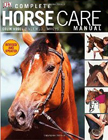
Complete Horse Care Manual [Hardcover]
Colin Vogel
Dorling Kindersley; HB (2nd edition) edition (1 Feb 2011)
ISBN-10: 1405362774
ISBN-13: 978-1405362771
A beautifully illustrated guide to horse care which will appeal to those who just like to be with horses, as well as owners of horses and ponies. There is background information on types of horses, horse body language, and other aspects of equine lore which is useful for people who just ride at weekends. The sections on general care, the horse at grass, stabled horses, feeding, health, and tack, are clearly explained, though some owners may find them a bit basic. This book is accessible to younger readers, who are likely to become knowledgeable very quickly on a range of horsey topics.
 Top
of page Top
of page
|
Click on the cover above
to go to this book
at Amazon.co.uk
|
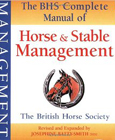
BHS Complete Manual of Horse and Stable Management (British Horse Society)
Islay Auty (Author, Editor), Jo Batty-Smith (Editor)
Kenilworth Press Ltd; 2Rev Ed edition (9 Sep 2008)
ISBN-10: 1905693184
ISBN-13: 978-1905693184
This is a more in-depth horse care manual than Vogel's 'Complete Horse Care Manual'. The BHS manual would suit animal care students, or stable owners, as well as owners with just one horse or pony. This book covers a wide range of topics, including tack, shoeing, feeding, and care for horses involved in competition events. Specialist horse owners may need more information, but this is more than enough for the average owner of a horse or pony.
Top
of page
|
Click on the cover above
to go to this book
at Amazon.co.uk
|
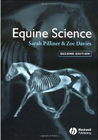
Equine Science
Sarah Pilliner and Zoe Davies
Wiley-Blackwell; 2nd edition (2004)
ISBN-10: 1405119446
ISBN-13: 978-1405119443
This book is a comprehensive guide to the scientific rationale for modern practices in horse care. It isn't a light read because it's quite technical. It is geared to British students of equine care courses, and professionals involved in horse care. It is clearly enough written to be accessible to interested horse owners who have some background in biology or vet care, and is especially likely to interest horse owners who go in for competition events, and want to improve the performance of their horse or pony.
Top
of page
|
Click on the cover above
to go to this book
at Amazon.co.uk
|
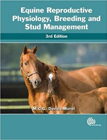
Equine Reproductive Physiology, Breeding and Stud Management
Mina C.G.Davies
Morel CABI Publishing; 3rd Revised edition (2008)
ISBN-10: 1845934504
ISBN-13: 978-1845934507
This is an updated classic, and is a quite technical reference book which is suited to owners of several breeding horses, and students of equine care. It covers a number of areas in detail, including physiology, and artificial control of equine breeding. The book is very well illustrated, which makes it accessible to owners and students without a great deal of veterinary knowledge, while providing enough useful information to satisfy professionals, including vets.
Top
of page
|
Click on the cover above
to go to this book
at Amazon.co.uk
|
Introduction to Horse Nutrition
Zoe Davies
Wiley-Blackwell(2009)
ISBN-10: 1405169982
ISBN-13: 978-1405169981
Zoe Davies has written a much more accessible guide to equine nutrition than David Frape's book on the subject (see below), though this is still fairly technical for the general reader. It is suitable for equine science students who want a thorough introduction to horse nutrition, and for owners who really want to come to grips with the subject, but lack a scoence background. The book is illustrated with diagrams and tables, which makes it easier to understand.
Top
of page
|
Click on the cover above
to go to this book
at Amazon.co.uk
|
Equine Nutrition and Feeding
David Frape
Wiley-Blackwell; 4th Edition (2010)
ISBN-10: 1405195460
ISBN-13: 978-1405195461
David Frape's Equine Nutrition and Feeding is a heavy-duty textbook aimed at veterinary students and vets, and is a little technical for most owners with no science background. It is very thorough, and helps students gain a deep understanding of the subject. If you have a science background, and have the patience and motivation to really get to grips with the subject, then this is the book for you, but be warned, it is not designed as a quick reference book for owners, or for animal care students just coming to grips with science!
Top
of page
|
Click on the cover above
to go to this book
at Amazon.co.uk
|
Essential Horse Health: A Practical In-Depth Guide to the Most Common Equine Health Problems
Kieran O'Brien
David & Charles; 1st edition (2007)
ISBN-10: 0715325426
ISBN-13: 978-0715325421
Kieran O'Brien´s Essential Horse Health is geared to owners who want to understand the most common problems they are likely to encounter with their horses. It is easy to find your way around the book, and it's well illustrated, so it's a useful quick reference guide and is easy to follow. It's not intended to replace your vet, but to alert you as to when you need to call the vet urgently, and to help with understanding what treatment your vet may prescribe. It's also a useful aid to preventing health problems. Older children who own horses are likely to find this book interesting, and can learn a lot from it.
Top
of page
|
Click on the cover above
to go to this book
at Amazon.co.uk
|
The BHS Veterinary Manual (British Horse Society)
P.Stewart Hastie (Author), and Carole Vincer (Illustrator)
Kenilworth Press Ltd (2006)
ISBN-10: 9781872082578
ISBN-13: 978-1872082578
ASIN: 1872082572
The BHS Veterinary Manual is a much more in-depth book than Essential Horse Health, and is geared towards both owners, and BHS students of equine care. It is fairly comprehensive, and is relatively easy to follow for a serious vet book, so is a good introduction to the subject for people caring for several horses. However, while there are many diagrams, it's not as well illustrated or as easy to follow as Essential Horse Health, so if you just have one horse or pony, and don't have a science background, you may find it heavy going.
Top
of page
|
Click on the cover above
to go to this book
at Amazon.co.uk
|
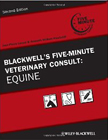
Blackwell's Five-minute Veterinary Consult: Equine
Jean-Pierre Lavoie (Editor), and Kenneth Hinchcliff
Wiley-Blackwell; 2nd Edition (2009)
ISBN-10: 0813814871
ISBN-13: 978-0813814872
Blackwell's Five-minute Veterinary Consult series is designed for vets who need a quick reference book. The book covers a lot of ground in a concise way. It's a very useful tool for obtaining information on different conditions, and making diagnoses based on symptoms. It is especially useful for veterinary students and newly qualified vets. It's also an invaluable resource for people caring for more than one horse, and who have a background in basic science. It is an American book, but contains a wealth of information that is relevant for British vets and horse owners.
Top
of page
|

Click on the cover above
to go to this book
at Amazon.co.uk
|
Saunders Equine Formulary
Derek C. Knottenbelt
Saunders (W.B.) Co Ltd; 2nd Revised edition (2005)
ISBN-10: 0702027901
ISBN-13: 978-0702027901
The Equine Formulary is a guide to medicines available for treating horses, so most of the text is an encylopaedia of medicines. It is designed for horse vets, veterinary students, and people who are responsible for several horses. The book is well-illustrated, with both drawings and photographs. There is a lot on how drugs can interact, and the drugs are referred to by their generic name, making it easier to identify them wherever you are. The book deals with diagnostic tests, bandaging, and other clinical aids, as well as drugs, so is a very useful source of information, especially for horse professionals who may need to take emergency decisions before the vet arrives, and for recently qualified vets, or vets who don't treat horses very often.
Top
of page |
See also:
Horses:
Riding, Training and Behaviour
Click
here to see some stamps with horses on
|


