Books on Animals
Rodents (chinchillas, chipmunks, gerbils, guinea pigs, hamsters, mice and rats)
If you want to buy a book, clicking on the book
cover will take you directly to that book on the Amazon.co.uk web site.
See also:
 Advice
on rabbits and rodents Advice
on rabbits and rodents
Books about rabbits
Stories
and information about small and furries |
 |
|
|
|
|
|
Click on the cover above
to go to this book
at Amazon.co.uk
|


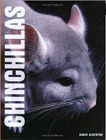
Chinchillas
David Alderton
Interpet Publishing (2008)
ISBN-10: 1842861824
ISBN-13: 978-1842861820
David Alderton is a prolific author on pet care, and his 'Chinchillas' is a very clearly written introductory guide to chinchillas as pets. It gives novices a clear ideas of the basics, and is also clear enough for older children to follow. David Alderton's book is less detailed than Mirella Poli's guide, but it's probably the best introductory guide around, and offers good value for money. It would make a nice present for a child who helps care for the family chinchilla, and is worth reading if you are wondering about a chinchilla as a pet. However, if you actually take on a chinchilla or two, Mirella Poli's book will be of more help.
 Top
of page Top
of page
|
Click on the cover above
to go to this book
at Amazon.co.uk
|
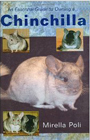
Chinchilla (Essential Guide)
Mirella Poli
Kingdom Books, Havant (2006)
ISBN-10: 1852792450
ISBN-13: 978-1852792459
Mirella Poli's book on chinchillas is more comprehensive than David Alderton's guide, and has enough to interest experienced chinchilla keepers, as well as being clear enough for novices. Chinchillas originated in the Andes mountains of South America, and there is an account of their early history as pets. There is also a lot of practical help on caring for and breeding chinchillas, including information on colours and genetics. A very helpful section is the guide to ailments that chinchillas may suffer from, and how to prevent and treat them. It is organized from A to Z, which makes it easy to find what you are looking for, if you're in a hurry. The book is also well-illustrated, with photographs, which makes it an attractive gift for anyone who loves chinchillas, as well as a useful source of information.
Top
of page |
Click on the cover above
to go to this book
at Amazon.co.uk
|
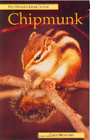
Pet Owner's Guide to the Chipmunk
Chris Henwood
Ringpress Books Ltd (1998)
ISBN-10: 1860540686
ISBN-13: 978-1860540684
Chris Henwood has written extensively on caring for chipmunks, and this classic is his most useful book. It is very accessible for novices, because it is clearly written and well set out. There is a lot on housing and feeding chipmunks, with a guide to their nutritional needs. There's also an explanation of how to prevent and tackle the most common health problems, and there's help with breeding chipmunks, including an explanation of chipmunk genetics, and help with hand-rearing orphans, or those rejected by their mothers. Experienced owners may find there is little in this book they don't know, but it's the best guide around for novice chipmunk owners.
Top
of page |
Click on the cover above
to go to this book
at Amazon.co.uk
|
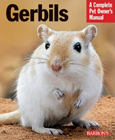
Gerbils (Complete Pet Owner's Manual)
Englebert Kotter
Barron's Educational Series (2010)
ISBN-10: 0764144294
ISBN-13: 978-0764144295
Englebert Kotter's book is a basic introduction to gerbils which is suitable for children who are learning about their pets, and adults considering taking on a gerbil. It's a handy book for getting you started, being very easy to follow, though you may find it frustratingly lacking in detail. There is little in this book that is likely to interest experienced owners, not much help with preventing and tackling health problems, and certainly not enough help for people wanting to breed from their gerbils. This book will help children who care for gerbils, but the responsible adult needs something a little more detailed.
Top
of page
|
Click on the cover above
to go to this book
at Amazon.co.uk
|
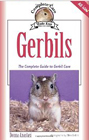
Gerbils: The Complete Guide to Gerbil Care (Complete Care Made Easy)
Donna Anastasi
Bowtie P. (2005)
ISBN-10: 1931993564
ISBN-13: 978-1931993562
Donna Anastasi's 'Gerbils: The Complete Guide to Gerbil Care' is a far more comprehensive guide than Kotter's book on gerbils. The basics, such as gerbil nutritional requirements, and housing needs, are well covered, and the book is particularly good on preventing, diagnosing, and treating health problems. What makes this book special is that it also conveys the joy of owning gerbils, explaining how to tame them, and play with them in ways that are fun for both owners and their gerbils. There's even a suggestion for gerbil art projects! Donna Anastasi is a respected American gerbil breeder who knows her stuff, and likes to share her expertise. The photographs are also a delight.
Top
of page |
Click on the cover above
to go to this book
at Amazon.co.uk
|
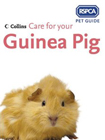
RSPCA Pet Guide - Care for your Guinea Pig
RSPCA (Author)
Collins; New edition (2004)
ISBN-10: 0007182694
ISBN-13: 978-0007182695
This is the official RSPCA guide to guinea pig care, and is geared to children and novice adults. It is short (48 pages) but packed with information which is presented in a way that's easily accessible to children. It covers all aspects of guinea pig care from choosing your guinea pig through feeding, grooming, exercise and health care. There's enough information here for a child with a first guinea pig, though you really need more information if you want to breed them.
Top
of page |
Click on the cover above
to go to this book
at Amazon.co.uk
|
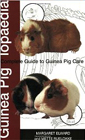
Guinea Piglopaedia: a Complete Guide to Guinea Pigs
Margaret Elward and Mette Ruelokke
Interpet Publishing (2003)
ISBN-10: 1860542514
ISBN-13: 978-1860542510
Guinea Piglopaedia is far more comprehensive than the RSPCA guide, and is very useful as a reference book, as well as being fun to read if you like these engaging creatures. There is plenty to interest experienced keepers, with a nice mix of the interesting and the practical, for example, there is a lot of helpful advice on preventing and tackling health problems. Both the authors, and Peter Gurney (see below) clearly know their subject, and both are excellent guides to guinea pigs. Guinea Piglopaedia is probably of more interest to experienced owners, and certainly deserves to become a classic.
Top
of page |
Click on the cover above
to go to this book
at Amazon.co.uk
|
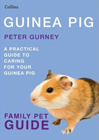
Collins Family Pet Guide - Guinea Pig (Collins Famliy Pet Guide)
Peter Gurney
Collins; Relaunch edition (2011)
ISBN-10: 0007436653
ISBN-13: 978-0007436651
Peter Gurney is the guinea pig guru, and this classic is probably his best book. It's clear that he loves guinea pigs. He writes well and conveys his enthusiasm in a way that's appealing to children as well as adults. This book is well set out and has a lot of photos, which children are likely to enjoy. It covers all aspects of care for guinea pigs, with especially useful information on guinea pig healthcare. He also covers their history, choosing a guinea pig, housing (with enough details for novices), feeding, gentle and safe handling, grooming (especially important for those with long hair), guinea pig behaviour, and breeding.
Top
of page |
Click on the cover above
to go to this book
at Amazon.co.uk
|
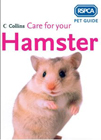
RSPCA Pet Guide - Care for your Hamster
RSPCA
Collins; New edition (2005)
ISBN-10: 0007193572
ISBN-13: 978-0007193578
Another pet guide from the excellent series of official RSPCA pet care guides. This book is a classic which has been revised and extended. The book is short (48 pages) but covers all the main aspects of hamster care, such as feeding, housing, hygiene and breeding. There is great stress on the need to respect the hamster's lifestyle, and its desire to sleep in the day, which is linked to an explanation of how hamsters live in the wild. The book is well-illustrated, with both photos and drawings, including a cross-section showing a hamster's burrow. There is some information on Russian and Chinese hamsters, which are more sociable than the Syrian hamster. Most of the book focuses on the Syrian hamster, which is a solitary animal, tending to fight intruders. Owners of Russian and Chinese hamsters may need more information, but it is a fairly complete guide for Syrian hamster owners. Children are likely to enjoy this book because it is easy to understand and the illustrations show many cute hamsters.
Top
of page |
Click on the cover above
to go to this book
at Amazon.co.uk
|
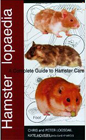
Hamsterlopaedia
Chris Logsdail, Pete Logsdail and Kate Hovers
Ringpress Books Ltd (Jan 2003)
ISBN-10: 1860542468
ISBN-13: 978-1860542466
Hamsterlopaedia is a seriously enjoyable book about hamsters, which tells you a lot of interesting facts about these delightful creatures, as well as being a very useful practical guide to hamster care and breeding. There's help with choosing a hamster, feeding and housing, a description of hamster, and an alphabetical list of hamster ailments. There is more information on the different types of hamsters than that provided by the RSPCA guide. Gneraly, this is a great book, for both novices and experienced owners. Children will love the pictures, and dipping into the book to learn about hamster lore.
Top
of page |
Click on the cover above
to go to this book
at Amazon.co.uk
|
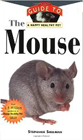
The Mouse (Happy Healthy Pet)
Stephanie Shulman
John Wiley & Sons; Revised edition (1999)
ISBN-10: 1582450064
ISBN-13: 978-1582450063
Stephanie Shulman's book on The Mouse as a pet is a very basic guide to keeping mice, which will appeal to children. It has become a classic because it is easy to follow, but you really need more information than this book provides if you plan on breeding mice, or indeed keeping more than one mouse.
Top
of page |
Click on the cover above
to go to this book
at Amazon.co.uk
|
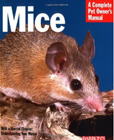
Mice (Complete Pet Owner's Manual)
Sharon Vanderlip
Barron's Educational Series (2002)
ISBN-10: 0764118129
ISBN-13: 978-0764118128
Sharon Vanderlip's book 'Mice' is a much more detailed guide than Stephanie Shulman's, and really, this is the best choice if you want to keep your mice healthy, living long lives. There is much more help with preventing, diagnosing and treating illnesses. This book is also very good on the basics, like choosing, housing and feeding mice. There's help with handling mice safely, and there are even suggestions for toys, and activities to keep your mouse entertained. The book is well-organized, with summaries set out in charts and checklists for easy reference. There's help with breeding mice, including the fancy varieties, with a basic guide to their reproductive cycle, pregnancy, nursing, weaning and the development of mice pups. The book is well-illustrated, so will appeal to older children, though younger children may find Stephanie Shulman's book more accessible.
Top
of page |
Click on the cover above
to go to this book
at Amazon.co.uk
|
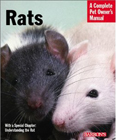
Rats (Pet Owner's Manual)
Carol Himsel Daly
Barron's Educational Series, 2nd Revised edition (2002)
ISBN-10: 0764120123
ISBN-13: 978-0764120121
Carol Himsel Daly's book 'Rats' is a good introductory guide to caring for rats, with information on choosing a rat, housing, and feeding your pet. There's also some help with health care. Most rat enthusiasts, however, enjoy playing with their pets, and teaching them tricks. While Carol Himsel Daly gives a broad understanding of how you can understand your pet rat's little quirks by understanding its wild ancestors, there's not a lot of practical help with handling, taming and training rats. So, while this is a useful book to have in your ratty library, a book or two on training rats will be of more help for you and your pet to enjoy each other's company. You also need more information on rat health than this book provides, especially if you keep more than one rat.
Top
of page |
Click on the cover above
to go to this book
at Amazon.co.uk
|
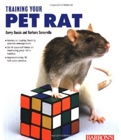
Training Your Pet Rat
G. Buscis
Barron's Educational Series (2000)
ISBN-10: 0764112082
ISBN-13: 978-0764112089
This is more than a guide to rat training, there is also help with choosing a rat, and developing a relationship, as well as suggestions for games that you can play with your rat. There are plenty of suggestions for ratty accessories, such as harnesses, and balls that rats can roll around in. You don't need to spend a fortune to keep your rat entertained, because many items that amuse rats can be made at home, and this book shows you how. The book has some lovely photos of rats, and the illustrations also make the text easier to understand. There are books on training rats which provide more detail, but as an inexpensive, introductory guide, this book is the best.
Top
of page |
Click on the cover above
to go to this book
at Amazon.co.uk
|
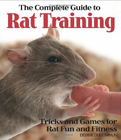
The Complete Guide to Rat Training (Complete Care Made Easy)
Debbie Ducommun
TFH Publications, U.S. (2008)
ISBN-10: 0793806518
ISBN-13: 978-0793806515
A lot has been discovered about how rats learn, and what they are capable of, because they have been used in laboratory experiments for such a long time. This knowledge is very useful for owners of pet rats, who want to give their pets interesting things to do. Novice owners may find they are better off reading Bucsis' 'Training Your Pet Rat' first, to get the hang of the basics, such as building trust. However, this book can take you much further in finding out what your rat can do. One great advantage of Debbie Ducommun's book is that it is based on extensive scietific research, though it is clearly written so you don't have to be a biologist to understand it. There are lots of anecdotes, which bring the book to life. Debbie Ducommun is also aware that rats each have their individual quirks and characters, as do their owners, so you can pick and choose what suits you and your rat. She gives help with the basics, like getting your rat to come when you call, and she gives plenty of suggestions for activities and equipment that you can buy or make at home.
Top
of page |
See also:
Advice
on rabbits and rodents
Books about rabbits
Stories
and information about small and furries
|


