Poultry (ducks, chickens,
bantams, geese)
If you want to buy a book, clicking on the book
cover will take you directly to that book on the Amazon.co.uk web site.
See also:
 Birds:
general Birds:
general
Falconry
and birds of prey
Click
here to see some birds on stamps
|
 |
|
|
|
|
|
Click on the cover above
to go to this book
at Amazon.co.uk
|

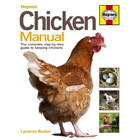
Chicken Manual: The Complete Step-by-step Guide to Keeping Chickens [Hardcover]
Laurence Beeken
J H Haynes & Co Ltd (4 Feb 2010)
ISBN-10: 1844257290
ISBN-13: 978-1844257294
One of the best, if not the best guide to keeping chickens, with help on all aspects, including choosing a breed, and obtaining your chickens. There's a lot of help with everyday care, and special considerations when the seasons change. There's advice on keeping a journal, hygiene and housing, including parasite control, and protecting your chooks from predators. Tender hearted chicken keepers may want to skip the advice on cooking! Generally, there is a lot of detail, though perhaps not quite enough in the section on building chicken houses. Overall, this book is highly recommended.
 Top
of page Top
of page
|
Click on the cover above
to go to this book
at Amazon.co.uk
|
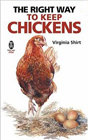
The Right Way to Keep Chickens
Virginia Shirt
Elliot Right Way Books (1 April 2007)
ISBN-10: 0716030187
ISBN-13: 978-0716030188
This is an especially useful book for people keeping chickens in towns, and takes novices through every step of chicken keeping, including choosing the best place in the garden for your chicken house. There's a lot of help with feeding and rearing chicks, and with what to do if things go wrong, and your chooks fall ill. The book is very clearly written, so easy to understand in emergencies. If you can bear to eat your chickens, there is also advice on how to store and cook them. Total novices do need to research a little more before building a chicken house, because there is not really enough detail in this book. Michael Roberts' Poultry House Construction, also featured on this page, is probably the best guide to chicken house construction. However, as a general guide, Virginia Shirt's book can't be faulted.
Top
of page
|
Click on the cover above
to go to this book
at Amazon.co.uk
|
Keeping Pet Chickens
Johannes Paul, William Windham
Publisher: Interpet Publishing
ISBN: 1842861034
Chickens can be enjoyable companions, and a lot of fun to watch. Keeping
Pet Chickens is a charming little book, especially suitable for novices
who want to keep a little flock. The book is very clearly written, with
colour photo illustrations throughout. There are handy hints in each chapter,
there is a useful glossary explaining poultry terms, and there is even
an index at the end.
The book covers a lot of ground, helping would-be owners to choose chickens,
prepare their home, and care for them. There are short chapters on a wide
range of topics, such as handling chickens, chicken behaviour, and how
to give chickens health checks. As an introductory guide to keeping pet
chickens, this book is excellent. It is very user-friendly, presenting
information in easily-digestible bites, and the format makes it attractive
to children as well as adults. However, owners of small flocks will find
that they need to go into poultry keeping in greater depth, building on
the solid foundation that this book provides. The large photographs of
chickens do take up a lot of space, and eventually, poultry keepers will
need to learn more about diet and disease prevention, for example, than
is offered in this book.
I would heartily recommend this book as a first step in understanding
chicken keeping, so long as readers understand that it is just a start
to exploring the wonderful world of chickens.
Top
of page
|
Click on the cover above
to go to this book
at Amazon.co.uk
|
Chickens at Home (7th edition)
Michael Roberts
Gold Cockerel Books
ISBN 0947870075
This is a short, practical guide to keeping chickens and bantams, which
covers different systems used by hobbyists. There is also help with preventing
and dealing with various ailments that chickens are prone to. Critics
may argue that the birds are not allowed enough freedom in any of the
systems described. However, as anyone who has kept chickens in Britain
knows, foxes are a serious threat both in rural and urban areas, so a
vision of free roaming birds is perhaps not as idyllic as might first
appear. Some sort of security barrier is needed for the chookies to be
safe. There is also advice on regulations affecting chicken keeping, especially
useful for anyone planning on keeping them in a back garden.
Top
of page
|
Click on the cover above
to go to this book
at Amazon.co.uk
|
Poultry House Construction
Michael Roberts
Gold Cockerel Books
ISBN 0947870210
Chickens need to be safe, but ready-made chicken houses are expensive,
so make your own. You can also build a chicken house and run which suits
your own requirements by adapting designs in this book. There is detailed
help on all aspects of building a chicken house, including plans for different
types of houses, and the materials and tools that you will need. The explanations
are clear enough to be understood by someone who is not especially skilled
in carpentry, or even a DIY enthusiast. The designs can also be used for
other birds and animals, such as ducks and rabbits.
Top
of page
|
Click on the cover above
to go to this book
at Amazon.co.uk
|
Ducks and Geese at Home (2nd edition)
Michael Roberts
Gold Cockerel Books
ISBN 0947870091
Michael Robert is a poultry expert who has published extensively for
hobbyists and smallholders. His ‘Ducks and Geese at Home’ is
an excellent short introduction for novices, and anyone considering taking
up ducks and geese. The different breeds are covered, with help in choosing
which breeds to start with, as well as advice on feeding, housing, and
preventing and dealing with ailments that ducks and geese are prone to.
This is essential reading before taking a decision on whether to embark
on keeping ducks and geese.
Top
of page
|
Click on the cover above
to go to this book
at Amazon.co.uk
|
Chickens in Your Backyard : A Beginner's Guide
Rick Luttmann
Rodale Press
ISBN: 0878571256
Rick Luttman's classic, well worth investing in for its common-sense
advice on caring for chickens. Luttman obviously likes chooks, even though
he is not above eating them. It's a good read, as well as an invaluable
manual and troubleshooting guide to help you set up your chicken project,
get your chickens happily laying.
Top
of page
|
Click on the cover above
to go to this book
at Amazon.co.uk
|
The Complete Book of Raising Livestock and Poultry
Katie Thear (Editor), Alistair Fraser (Editor)
Pan
ISBN: 0330301586
This is a classic introductory guide to rearing poultry and livestock,
and is considered essential reading by many smallholders, though readers
should note that the information on legislation needs updating. It is
especially helpful for people wanting to learn how to care for poultry
and livestock, and perhaps make a little money. It's basically a practical,
'how to' guide, rather than a coffee-table book.
Top
of page
|
Click on the cover above
to go to this book
at Amazon.co.uk
|
British Poultry Standards
Victoria Roberts
Blackwell Science (UK)
ISBN: 0632040521
The bible for poultry fanciers. This book is very helpful for people
choosing poultry breeds, and is fascinating for the information it contains
on the more unusual varieties. It is of interest to hobbyists, people
who have chickens as pets, and to commercial poultry keepers. There are
over 200 colour illustrations of the different breeds. It's a little expensive,
but well worth the investment, since you get a lot of information and
pleasure for your money.
Top
of page
|
Click on the cover above
to go to this book
at Amazon.co.uk
|
British Large Fowl (The Gold Cockerel Series)
Michael Roberts, John Tarren (Photographer)
Gold Cockerel Books
ISBN: 0947870113
The essential reference book for poultry keepers interested in different
British chicken breeds. This is a well-illustrated slim volume, which
has enough information for people wanting to choose a breed for show,
laying or the table, and for people aiming a bit further than the common-or-garden
varieties. The pictures are to drool over, and it's difficult to narrow
down a choice to just one variety, there are so many beautiful contenders.
Top
of page
|
Click on the cover above
to go to this book
at Amazon.co.uk
|
Bantams in Colour (The Gold Cockerel Series)
Michael Roberts, Sara Roadnight (Illustrator), Richard
Roadnight (Photographer)
Gold Cockerel Books;
ISBN: 0947870008
This is a useful illustrated guide to bantam breeds with detailed information
about each breed, such as colour variations, egg colour, and the breed
specifications. It's a great help for people choosing a bantam breed,
as well as those wanting to breed show birds.
Top
of page
|
Click on the cover above
to go to this book
at Amazon.co.uk
|
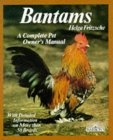
Bantams: A Complete Pet Owner's Manual
Helga Fritzsche, Fritz W. Kohler (Illustrator)
Barron's Educational Series
ISBN: 0812036875
This book is geared to novices of any age, but younger readers will find
this guide to bantams especially attractive. It is well written, well
set out, and the advice is clearly explained.
Top
of page
|
|
Old & Rare Breeds of Poultry
John Butler
Beech Publishing House
ISBN: 1857362268
A delight for poultry enthusisasts interested in old and rare breeds,
with good illustrations. It is, however, quite expensive for a fairly
slim volume.
Top
of page
|
Click on the cover above
to go to this book
at Amazon.co.uk
|
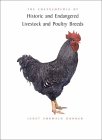
The Encyclopedia of Historic and Endangered Livestock
and Poultry Breeds (The Yale Agrarian Studies Series)
Janet Vorwald Dohner
Yale University Press
ISBN: 0300088809
This is a wonderful book, and you don't have to be a smallholder to appreciate
it. It works on many levels. There is a simple fascination with the sheer
variety of livestock and poultry breeds, and the arguments for preserving
rare breeds are put forward in a very eloquent way. Both farming and medicine
benefit from the livestock and poultry diversity. The book is comprehensive,
and very well researched, and the author also has practical experience.
The book is based on research on breeds in the UK, Canada and the US.
Some 200 breeds are described, covering different types of livestock,
including horses, goats, sheep, pigs, cattle, and poultry (chickens, ducks,
turkeys, and geese. There are some 250 illustrations, with 32 pages colour
plates. It's a little expensive, but well worth buying because it's such
an enjoyable and fascinating book.
Top
of page
|
Click on the cover above
to go to this book
at Amazon.co.uk
|
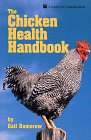
The Chicken Health Handbook
Gail Damerow
Storey Books
ISBN: 0882666118
The essential health handbook for people who keep a few chickens as
pets or as a hobby. There is a lot of help with disease prevention as
well as diagnosis and treatment of poultry diseases. It is easy to use,
with special help for people trying to work out what is wrong with a chicken
with particular symptoms. Some home remedies are described, as are indicators
that expert help is needed.
Top
of page
|
Click on the cover above
to go to this book
at Amazon.co.uk
|
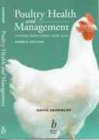
Poultry Health and Management
Sainsbury
Blackwell Science (UK)
ISBN: 0632051728
This is more in-depth and more expensive than Gail Damerow's book, and
you need to be able to handle information presented in a quite technical
way. It's also more expensive than 'The Chicken Health Handbook', though
you get more for your money. This edition has been updated to include
new environmentally and welfare friendly methods of keeping chickens,
and there is a lot more information than Damerow, for example on hygiene
and usage of vaccines. There is also up-to-date information on best practice
for nutrition, lighting, egg collection and housing, and there is useful
information on legislation for people selling poultry products.
Top
of page
|
Click on the cover above
to go to this book
at Amazon.co.uk
|
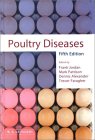
Poultry Diseases
Frank T.W. Jordan, Mark Pattison, Dennis J. Alexander,
Trevor Faragher
Saunders
ISBN: 0702025976
A comprehensive guide to common and rarer poultry diseases affecting
all types of poultry (including ducks, turkeys, guinea-fowl and game birds,
as well as chickens). This references work has useful advice on prevention
through best-practice husbandry. There is also information on diagnosis,
treatment and control of diseases, and an account of the chicken industry,
so it is suitable for vets and others who have a lot do to with the poultry
industry. There are useful sections on public health and food safety.
This edition has been revised and expanded, with a new chapter on game
birds. It covers more ground than Sainsbury, and is the definitive work
for poultry specialists. It is also more expensive than Sainsbury.
Top
of page |
See also:
Birds:
general
Falconry
and birds of prey
Click
here to see some birds on stamps
|


